Episode Transcript
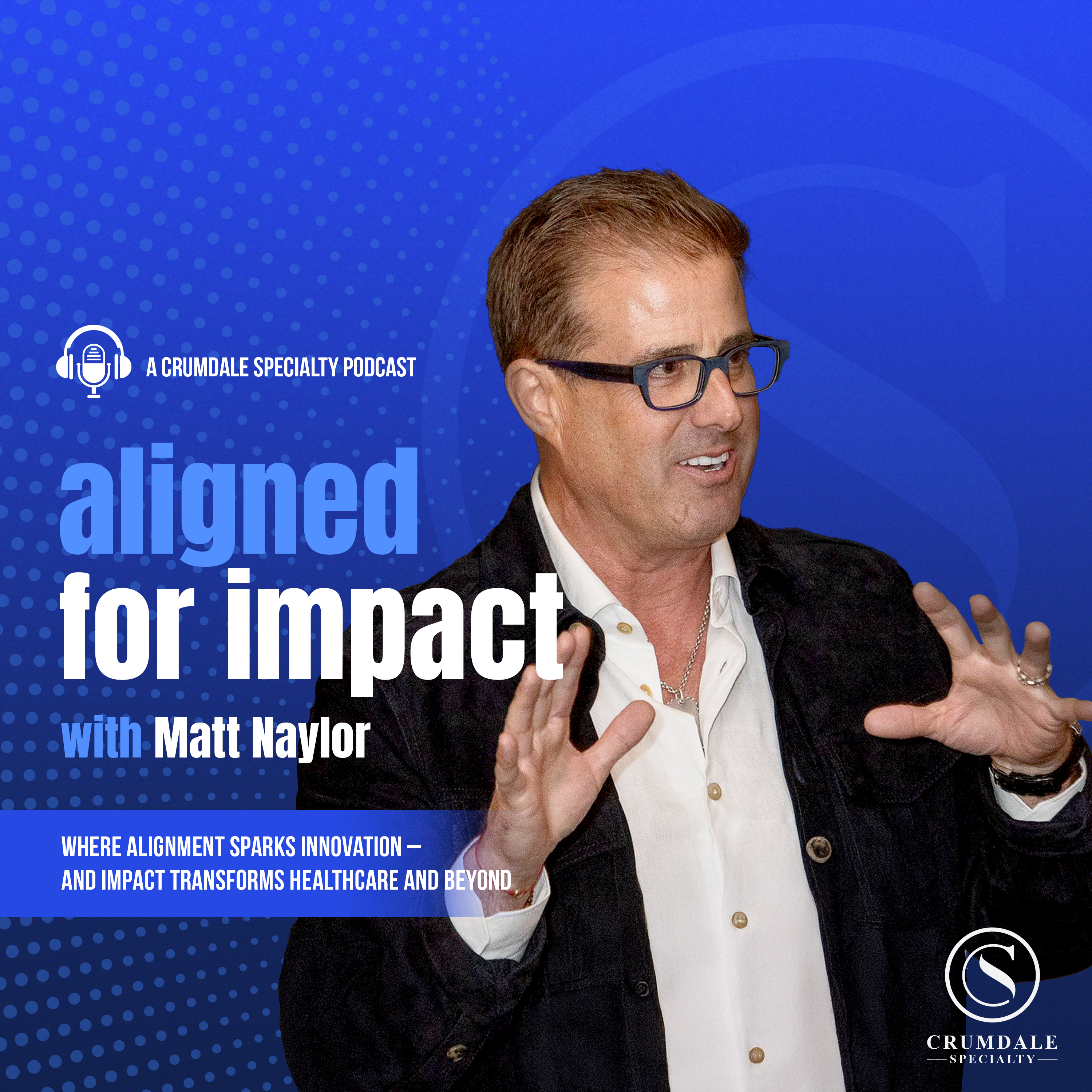
[00:00:02] Speaker A: Welcome to Align for Impact. I'm your host, Matthew Naylor. I started this podcast because healthcare and leadership both come down to the same thing. Alignment. When people, purpose and performance connect, real impact happens.
On this show, we'll talk with entrepreneurs, brokers and change makers who are challenging what is broken in healthcare and in business and find new ways to make a difference for companies, communities and the people they serve.
Pat, my podcast is all about impact and alignment and I really love to get to know people.
You know, obviously, you know, we'll talk a great deal about employee benefits and the self insured healthcare market and all that wonderful stuff, but everybody in life has some type of journey, you know, where they began, like kind of where they are now and where they're headed in their lives.
And, you know, I love alignment and impact because when you have great alignment, you can then have really great impact.
And I love to start our conversation with just getting to know you.
Where are you from, Pat? Where'd you grow up? You know, how'd you get into the insurance business?
[00:01:26] Speaker B: So I actually was born in Italy and I speak three languages today.
[00:01:32] Speaker A: Wow.
[00:01:32] Speaker B: If you call the dialect a fourth language, it's a fourth language.
But I was born there and I grew up until about eight years old.
On my eighth birthday, we came to the US on a boat, the last Leonardo da Vinci.
And what happened was on my eighth birthday, my dad took me to the front of the boat and said, see that Statue of Liberty?
That simply means freedom, which means if you work hard, you'll get to be someone someday. And that just stuck in my head.
And I didn't want to be like anyone else.
I was proud at 8 to basically be different, you know, where most kids don't want to be different.
And I was driven. And I said to my mom and dad, at that point, I said, I, I'm going to be someone. I'm going to be famous.
Today I actually have my own company, I have a great team, we have multiple offices. But it's simply because of grit. It's simply because of resilience. It's simply because of treating people with respect and dignity, but driving, you know, your life strictly by integrity.
[00:02:52] Speaker A: Pat, you sound like, I love people that live life in an intentional way.
People sometimes speak about being intentional, but they don't actually live it.
I just need to go back a couple sentences.
Where'd you grow up? In Italy?
[00:03:13] Speaker B: I grew up in Puglia. Really? Southeast.
[00:03:16] Speaker A: What took your family to have that all. Opportunity, Opportunity.
[00:03:21] Speaker B: My parents just felt, you know, just looked at all of us and said, gosh, we need something better for our children because, you know, being in the southern part, it's more of an agricultural.
And we wanted to stay together as a family.
And so we did it the right way. We immigrated here, took about two years in the process, but it's been just a great journey every day. I can truly say that I'm grateful to be here and I'm grateful to be an American because I became a citizen.
It's just, this is my country.
[00:03:57] Speaker A: That is so cool. So, Pat, you came from Italy, come into New York City.
Where did you grow up as a young person when you came to America?
[00:04:08] Speaker B: So we were supposed to live in California.
[00:04:10] Speaker A: Really, that changed.
[00:04:12] Speaker B: Plan change there. And we have family on the east coast in Maryland. And so we settled in Maryland and we've lived there all of our lives. I now have a place in Florida as well.
[00:04:23] Speaker A: No nice.
[00:04:24] Speaker B: And just a little bit of a break here and there. But Maryland has been our home for a long time.
[00:04:31] Speaker A: You went to middle school, high school, college, college, all in Maryland?
[00:04:36] Speaker B: I did.
[00:04:37] Speaker A: Okay.
[00:04:37] Speaker B: I did all private schooling. Okay. And so that was important to me. I'm a long life learner.
Love learning. That's why I love being here today.
[00:04:47] Speaker A: Yeah.
[00:04:47] Speaker B: You know, it's just. It's. You never stop learning.
[00:04:50] Speaker A: No.
[00:04:50] Speaker B: You know, that's the only way that I think you can fully understand what the world's about.
[00:04:55] Speaker A: Where'd you go to college?
[00:04:56] Speaker B: I went to Towson State.
[00:04:58] Speaker A: Nice.
[00:04:58] Speaker B: And then I actually also went to Hopkins.
[00:05:02] Speaker A: Okay. Got an MBA or.
Cool.
[00:05:05] Speaker B: Yeah.
[00:05:06] Speaker A: How did you get into the employee benefits insurance business?
[00:05:11] Speaker B: So, funny story, you know, I was actually a marketing communication major and decided that I really wanted to own my business someday in pr.
And Guardian Life was actually on our floor, and they enticed me to come over after I finished my schooling because I was doing an internship for a large commercial company out there and started talking with them and said, look, we'll send you through the programs and we'll teach you, but you have the right personality. You have the right, you know, drive. That's what we want.
And I said, I'm young, I'm single. Why not? You know? But insurance, huh? So I learned underwriting. I went through my underwriting, the underwriting process, got my certifications, and then grew up in that, you know, industry. In the industry. On the carrier side, Anderson Group K N gave me a great opportunity because of it. When they did the restructure, which allowed me to really take one of three roles. I took the operational Role which was really going around the country and putting in SOPs so that there was an alignment across the organization.
And then after all that, I said, I'm still young. What do I do now? I love the industry.
I went over to the broker side.
[00:06:32] Speaker A: Wow, that's a big switch.
[00:06:33] Speaker B: It was a big switch, but wow, what an eye opening opportunity.
[00:06:38] Speaker A: Did you go right from guardian to another broker or did you start? You did.
[00:06:42] Speaker B: No, I went to another broker.
[00:06:44] Speaker A: Okay.
[00:06:44] Speaker B: And I helped that organization grow.
[00:06:47] Speaker A: Okay.
[00:06:48] Speaker B: And.
And so then what happened was, you know, I. I just saw too much, that I am a very ethical person.
And I saw a lot that was not driven by integrity. And so at that point I decided it was time to go. I don't believe in the fully insured models. I don't believe in driving the client to get extra bonuses. I feel that that's against what we should be doing.
And so then I started my own firm. I literally.
[00:07:18] Speaker A: What year was this?
[00:07:20] Speaker B: This was 2012.
[00:07:22] Speaker A: Wow.
[00:07:22] Speaker B: And so within 72 hours, 100% of my company.
[00:07:26] Speaker A: So you sat at your kitchen table.
[00:07:27] Speaker B: I did.
[00:07:28] Speaker A: And you were like, I'm going to start my own business. I've never been an entrepreneur.
[00:07:32] Speaker B: And it was a.
[00:07:33] Speaker A: Here we go.
[00:07:33] Speaker B: It was a hard, not a hard decision. It was pretty much, I was in Texas, I was getting ready to fly in. I was told that I had to drive the business somewhere. And I said, I'm not doing it. And I wrote my resignation letter in the air and basically put it in that morning and went to have some lunch. After lunch, started calling my clients because I had a special agreement that I personally pushed for.
And within 72 hours, 100% of my clients came over. And I still have many of those clients, if they haven't gone through acquisition, that have helped us grow.
So it's. It's been fun.
[00:08:11] Speaker A: How big is capital services today? Like, how many employees do you have?
[00:08:15] Speaker B: So we have 32.
[00:08:16] Speaker A: Wow.
[00:08:17] Speaker B: Employees.
[00:08:17] Speaker A: How many customers?
[00:08:19] Speaker B: We have about 320 right now.
[00:08:22] Speaker A: Okay.
[00:08:23] Speaker B: Yeah, it's. It. We have a couple more right now coming in. So that's why I was there looking at my.
[00:08:28] Speaker A: What's the pat. What's a typical client look like?
[00:08:30] Speaker B: Our typical clients are 300 plus.
[00:08:33] Speaker A: Okay.
[00:08:33] Speaker B: And we have small clients. We have a client that's 35,000 employees. We do consulting work for.
For us, it's that 31 flavors that we like. We like, you know, things to be complicated so that we can put it together. That's the fun part.
[00:08:48] Speaker A: Yeah.
[00:08:48] Speaker B: Anyone can do vanilla, you know, get it off the shelf as a carrier and regurgitate it. That's not what I want to do.
[00:08:54] Speaker A: Pat, how'd you learn about self funding?
[00:08:57] Speaker B: Well, from my guardian days.
[00:08:59] Speaker A: Okay.
[00:09:00] Speaker B: You know, and then just basically from the underwriting process, and then from there, we just. Basically, for me, it was just a whole bunch of different classes and courses, being around others, that taught me things along the way.
But that's how we've learned, you know, as a firm, too, done it together.
[00:09:19] Speaker A: As an entrepreneur starting a business from scratch, you need to have a lot of grit. You need to be really resilient. You have to be very resourceful.
What are some of the lessons learned? What are some of the issues and challenges you faced along the way, and how have you kind of overcome them?
[00:09:39] Speaker B: Well, I have a very entrepreneurial family. We're all business owners in different industries.
And my brother said to me, the hardest part of owning a business are gonna be the people.
And at the beginning, it was. It's just, you know, at the beginning of the business, you're trying to figure out, you know, I need this role. I need this role. Not really understanding there's a profile, you know, aspect of what you're looking for. So I pulled back the reins, and I basically profiled from what my employee was gonna look like. Well, first it was leadership.
How was I going to show up?
What were my employees going to look like?
Who are my strategic partners? What are they going to look like, my clients? What are they going to continue to look like? And all of that had to be aligned. And it was. And once I actually got that part right, the right people just started flowing in. I felt like I just threw it up to the universe, and the right people just came in to the organization, and it's been fun.
[00:10:41] Speaker A: What, you know, healthcare, inflation's a real thing. You know, employers large and small are facing real problems. You know, the big insurance companies, the big health systems, they're not bad people.
They serve a purpose in the marketplace, but they're not solving the problem.
You know, what. What are from your perspective and experience? Like, what are some of the biggest problems and challenges and issues today, and what are you and your firm doing to solve them?
[00:11:10] Speaker B: So one of the biggest issues. I'm a survivor. You know, I'm a cancer survivor for about seven years. And I just started coming out privately, you know, like, I was very private about.
Doesn't matter how much you know, you know, and how much experience you have.
But the problem is you don't know where to go when you find out that you have a chronic issue. Right. And so at that point, what I learned is we need navigators.
And so through that journey, what I did is I actually put myself in the seat to know what is it that we have to do. We have to educate our clients.
They have to know what the options are. If they don't, and you have to also assess, where are they in the process.
We can tell them all day long, your second to third largest P and L item is insurance.
But if they don't fully understand it, they're not going to do anything about it. And so we're very passionate to make sure that first, it's all about the experience. My company was based on that Nordstrom experience.
We take care of the client, we take care of their employees as if they're our own. And so that's what we do, is we believe in the navigation.
Also, we know that the chronic conditions are getting worse.
I'll be the next chair for a very large hospital system.
And I see the backside of things. I see the chronic conditions that are continuing to go up. For us, it's finding the right strategic partners that can bring solutions in. Whether it's a PBM solution, a stop loss solution, navigation, case management, all of those solutions have to be embedded in. There's too much silos going on.
But everyone has to have the same interest, which is taking care of the client, mitigating risk, making sure that the experience is there, making sure that people fully understand what their options are so that they can make good decisions, and then to know that there's a trusted partner right behind them to take care of them.
[00:13:21] Speaker A: Wow. How.
How did you meet Crumbdale Specialty?
[00:13:26] Speaker B: Chip.
[00:13:27] Speaker A: Chip.
[00:13:27] Speaker B: Chip, yes. We worked with Chip in the past.
[00:13:30] Speaker A: Okay.
[00:13:31] Speaker B: And he called and said, I have a new gig.
[00:13:34] Speaker A: Yeah.
[00:13:35] Speaker B: And I said, I want to learn about it. And so that's how I met Crumbdale. And I'm very excited. From what I heard so far, I am so excited that we were introduced because I think that there's so many good things in alignment there, which is important to us on what we can do.
I believe in disruption in a good way. Right.
We're here to take care of people.
And that's where my passion is. And I want to partner with those other strategic partners that believe in the same thing.
For me, our mantra, or company mantra, is person first approach.
Do the right thing and profits follow.
Don't look at yourself, don't look at your profits. Everything else will follow if you do the right thing.
[00:14:25] Speaker A: Where do you see your business going? I can hear the passion, purpose, the happiness and joy in your voice around being a leader and being an entrepreneur and growing a business.
You know, like if we were sitting here three or four or five years from now, like, what. What does success look like for you?
[00:14:46] Speaker B: Continue to stay independent.
You know, we. I have mentored my replacement for the last 20 years, and she's 20 years young, younger than me, and just has the same drive, the same passion.
So we want that legacy to continue on, but we need the right strategic partnerships to support us.
And we just want to be able to do the right things for the clients. We want to bring better solutions. We want them not to worry about putting food on their table, their family's table. They shouldn't worry about that. Or I can't get care because I can't afford it, because broker out there actually gave them high dollar deductibles, not realizing, doing the full due diligence of they can't afford it.
So it may drive down costs, but in the wrong way. You're putting barriers out there. Let's remove barriers together.
That's what I believe in.
[00:15:43] Speaker A: That's so cool, Pat.
It's probably pretty personal, but as an entrepreneur going through a real health issue, you know, being a survivor, how did that change you as a person? Like, what kind of impact did it have on you intellectually? What kind of impact did it have on you professionally? What kind of impact did it have you on you personally? Like, your emotional well being like that couldn't have been an easy part of your personal journey.
I'm sure there were lots of lonely moments.
[00:16:28] Speaker B: It was a very scary time, you know, and I don't think anyone's ever really prepared for something like that.
But the passion that drives me, my why is waking up every day to make a difference and not being able to do that during that period of time was very difficult.
And it allowed me to quiet my soul, reflect, and really reconsider so many different things in life. And it allowed me to know I'm on the right path. I feel good about where I'm going, But also I have amazing, amazing people around me. My employees are just.
I can't tell you enough. They're my family, they're my heart, and I take care of them and they take care of me.
The support aspect when you're going through something like that is just so important.
Why are people, you know, the patients out there, why are they lacking that? What can we do to give that to them?
Because they don't have the support that I had. I'm very, very fortunate and blessed.
Also. My spiritual journey, you know, became very strong during that process.
What I said to my doctors is that it just quieted my soul. It allowed me to know there's so much noise out there. If you quiet the noise and really look deep in your soul, you'll be able to know exactly what you should be doing on this earth.
And I want to do that every day because that's what makes me happy.
[00:18:10] Speaker A: I love your story for so many reasons.
You know, I've been an entrepreneur in the insurance business for 30 years.
I have five amazing kids.
I have two boys and three girls.
And I don't think there's been enough opportunity created for women, you know, just in an industry in general.
But when my experience in the insurance business, it's been.
It's been difficult for women to get ahead.
How much of that experience for you, like, motivated you and drove you? Because I can hear in your voice, like, this grit, this determination, like, how did that influence your life?
[00:19:07] Speaker B: So I have two brothers, older brothers. I'm the youngest of four, you know, so I know what it's like to just keep fighting through.
But for me, yes, I mean, it's. The insurance business is a man's world. We get it.
For me, it was not about what you see on the outside. It's what you see here and what you hear and making the right decisions, because all this goes away, you know, but your heart, your relationships never do if you, you know, build them the right way.
And so that's what I did, is I'm an excellent relationship builder because I genuinely care about people, and I want to know about them, and I want to know what, you know, makes them tick, and I want to be able to help them. You know, I never, ever made it about me.
And I think that's. That's also the key of my success, is I make it about other people.
And God blesses me in so many different ways.
It's not that hard.
That's the secret ingredient. And in Italian, we say that's our secret sauce.
[00:20:13] Speaker A: Yeah, well, it isn't that hard to say when you think about working hard, doing the right thing, and supporting people around you. It's not hard to say, but for some reason, people have a difficult time doing it sometimes.
And so it's interesting that you've really have made that at the center of your values and your personal mission.
[00:20:38] Speaker B: Well, I think I also function differently.
The difference between us, gender wise, is I'm more focused on, I'm the caretaker. I want to take care of people, you know, whereas on the male side, it's always about the money to be able to take care of your family.
And for me, I had to.
I didn't. I never struggled because it's like, nope, it's not who I am.
I'm going to focus on the relationships, and those relationships are going to multiply as they have, knock on wood.
And continue to. If you do the right thing and not focus on the other part, it will come. But I think people struggle with money, power, egos, and I said, none of that. I don't need it.
You know, I will go ahead and show up differently, and I hope that others will do the same.
[00:21:31] Speaker A: Yeah, that's such a cool story. Pat, what questions did I not ask you that you wanted me to ask you?
[00:21:39] Speaker B: What would be one thing that no one would ever think that I actually did in life?
[00:21:46] Speaker A: Well, I wouldn't have known you were a survivor.
[00:21:48] Speaker B: Thank you.
[00:21:49] Speaker A: I wouldn't have known. When we started this conversation, you were an entrepreneur.
[00:21:53] Speaker B: Thank you.
[00:21:55] Speaker A: I can now know that because of those two experiences in your life, you are a very resilient, resourceful person that's full of a lot of grit.
And those things you don't learn in a classroom, sometimes you learn them if you're raised in the right family and you're around the right people, but. But sometimes you just learn them on your own. And I enjoyed the conversation because I learned a lot about you over the last 30 minutes. So thank you.
[00:22:21] Speaker B: Thank you.
Yeah.
[00:22:23] Speaker A: Cool.
[00:22:24] Speaker B: All right, well, thank you.
[00:22:25] Speaker A: Thanks, Pat.
[00:22:25] Speaker B: I really appreciate it.
[00:22:26] Speaker A: Yeah.
This is Matthew Naylor. You've been listening to Aligned for Impact.