Episode Transcript
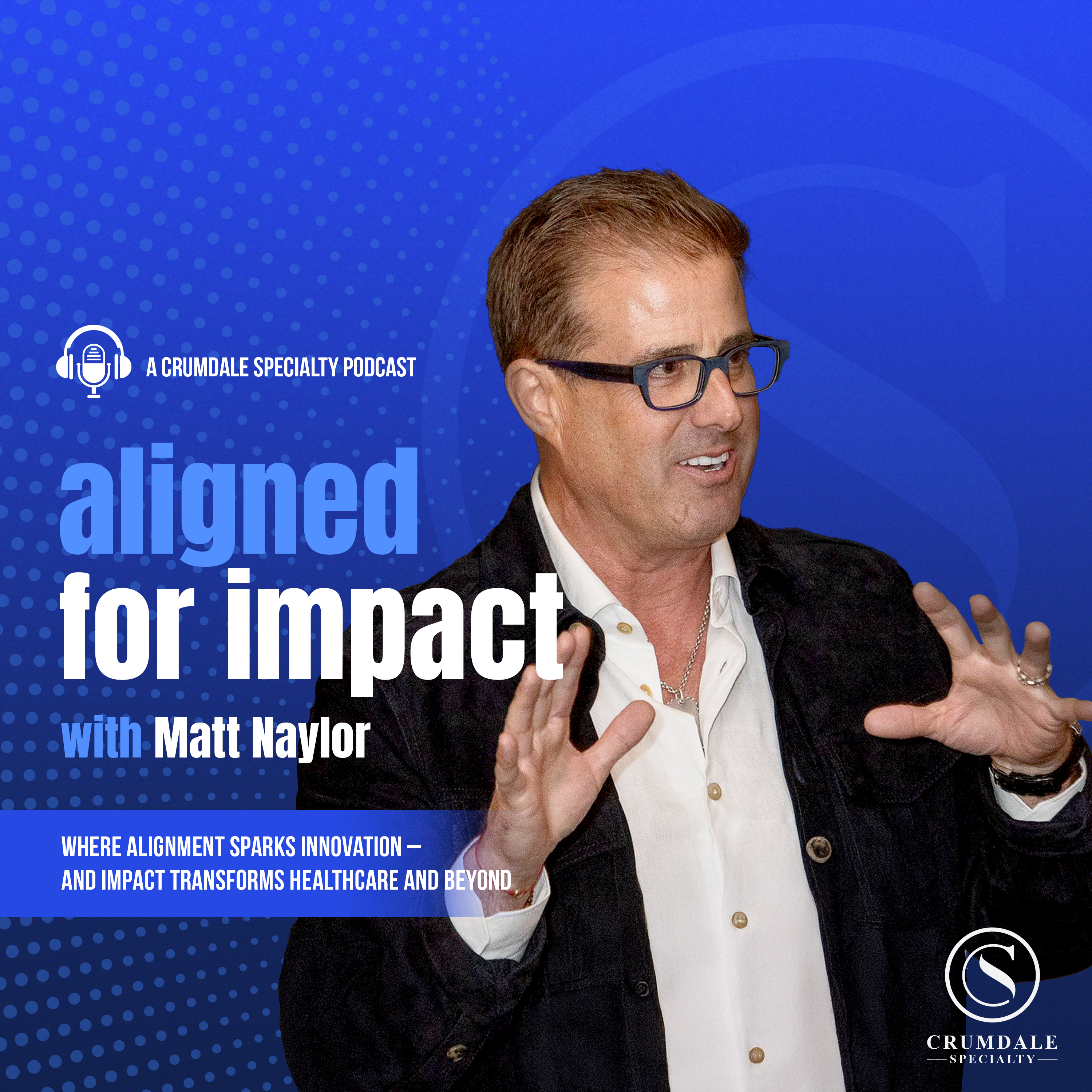
[00:00:03] Speaker A: Welcome to Align for Impact. I'm your host, Matthew Naylor. I started this podcast because healthcare and leadership both come down to the same thing. Alignment.
When people, purpose and performance connect, real impact happens.
On this show, we will talk to entrepreneurs, brokers and change makers who are challenging what is broken in health care and in business and find new ways to make a difference for companies, communities, and the people we serve.
Ben, welcome to the show.
[00:00:42] Speaker B: Thank you for having me.
[00:00:43] Speaker A: Matt Naylor, I'm your host and I love talking about alignment and impact, and I love starting with your story. You know, it's always great when you know you have new people on and you find out kind of where you're from. You know, how'd you get into the insurance business? Where'd you grow up? Just, let's begin by just telling us about yourself.
[00:01:05] Speaker B: I. I'm a young man, not that young anymore, but, you know, everything's relative. From Columbia, South Carolina, born and raised. Can't get away from it. I tell people all the time, my, my soul is to the soil there, so it's gonna be hard to get me out of there. Right.
Was raised by my mother with my brother and sister. We had a really interesting upbringing between Bennettsville, South Carolina, which, you know, Barack Obama showed up once, told and told us that we lived in the Corridor of Shame or something along those lines.
And, and then from there, lived in Columbia, where my mother's been a school teacher for now, going on year 30, I believe this year at Irma Middle School, where I went to high school. And then I went to college in Newberry, South Carolina, at a private Christian school called Newberry College, and had a great time there, played football. And, you know, my roots and foundation have always been about people.
You know, when I was growing up and you asked how I got into this industry, I, I think a lot insurance finds people. Our industry finds people, and it finds the right people, too.
But it found me probably when I was going into ninth grade and my mother had a complete and total hysterectomy. And the reason that's valuable here is because she had a ton of complications. Now, my mom, my old life, Matt told us I make less as a school teacher. And by the way, in South Carolina, they make a lot less, but I make less. But this, this ID card, this Blue Cross Blue Shield ID card, we're going to be fine. If anything ever happens to us, well, my mom was in the hospital with complications for almost two weeks.
And, you know, then afterward, raising three children on your own on a school Teacher salary with a dying father from cancer.
We couldn't make it and we lost our house.
We found a rental home.
We bounced around that eighth grade year. I think we moved six times in two years. But we got back on our feet, right? But it was hard. And so I always wanted to align myself with one. I blamed the hospital.
I hold a grudge too. I can't help it. I wish I had better character, but I hold grudge. And so I always wanted to take on the hospital because I felt like we got wronged.
And so fast forward, I started working for a great company called Team ia and I got to see local company at Alex in South Carolina. And I was building data centers and custom software with a great guy who I'm still close friends with to this day, whose father really mentored me very well. And I've been very, very lucky in my life to have great mentors that I probably didn't deserve.
And we were working on a project at a local BPO in the workers comp industry. And I looked around the room, I said to myself, everything's paper and everybody's 100 years old.
If I can't make it in this, I can't make it anywhere.
So I got recruited to a startup called Net Claim.
And what we did was the first notice of loss, first report of injury for third party administrators across the country on the workers comp side. And I saw firsthand working with York Risk, which later becomes more important in my journey.
Gallagher Bassett, owned by Arthur J. Obviously esis owned by Chubb here locally in Philadelphia and several other independent TPAs across the country.
How workers comp claims are adjudicated, what are the technologies and processes they were stacking and how our software can interact with it. Now, again, I was very lucky to be around great leaders. So Hayward Marsh was our general manager and he's a great CEO at a really good insurtech company in Kansas nowadays. And Hayward challenged me with him to help lead a predictive analytic modeling suite within our software. And so I worked with two vendors on that, around our data stack processing over, you know, close to a million claims a year. And we were able to create actionable insights around fraud predictions, subrogation, likelihood of litigation, working with worker workers, comp adjusters, and then mapping out those TPA workflows. So after I got kind of, for lack of a better term, famous for that and that side of the house, a great guy named Rob Gelb left York Risk when it got acquired by Sedgwick. And he came and became The CRO of United Claim Solutions which is now called Valence Health.
And Rob knew me from net Claim and he said, Ben, I don't know what I want you to do for me, but I want you to come join me here at what is going to be Valens.
And I want you to do everything from sales to help tie these four or five acquisitions together to bring AIML into our workflows, to work with our existing and new customers.
And we were doing that, we were rolling, got to meet great people along the way, another great mentor and Ronnie Brown who really helped me in my journey, who you've met.
And from there this thing called COVID 19 happened and I became a very expensive line item.
So Rob and the board wanted me to go a different direction and I accepted that. And so I ended up joining my best customer who was Continental Benefits. And from there they immediately got required by Marpay Labs and we became Marpay Health. And so I was the first, the last employee of Continental Benefits and the first employee or new employee of Marpay Health.
And from there what did Marpe Health do? Marpe Health was a third party administrator. I think we were cutting edge. I think we were a little ahead of the curve. We were a third party administrator really focused on trying to blend managed care with general TPA work and trying to take that next step forward for self insured medical plans. Yes sir.
[00:07:18] Speaker A: And did you have a focus? School districts, municipalities, universities, health systems? Was there things that you as a TPA focused on?
[00:07:28] Speaker B: I wouldn't say we, we found ourselves focusing on things. Right. So initially when I got there and started rolling, I was focused on K12 education because there were changes in legislation that allowed self funded plans to carve themselves out from the state plan. And that's actually gone very well in that market right to this day. It's gone very well.
Then from there I personally saw the opportunity for small, small and medium sized business self funding. You know most third party administrators, their systems are built to support 500 plus and only, only 500 plus employers. Their vendors are only, only built to support that large market segment. All of their workflows, Matt, in my opinion are tied together to do that. And they don't trend down. It's a bottom, it's a top down strategy that they're imposing. Nobody yet I thought was built to be bottom up with impact on the member holistically. And we attempted that through strategic partnerships with, with Crumdale at the time, with also, you know, with Hari Sundrum and Radeon and other distribution partners that I helped create.
And then from there our focus really trended for me personally to small and medium sized business across the country, regardless of sic code. I thought I could developed in conjunction with Ronnie, Art Hoth and a few other people, a really great stack and Nathan Ogden, a really great stack to help small and medium sized businesses. And we were very lucky to have, you know, great partnerships in our industry, which is obviously how we met.
That helped us reinforce that.
[00:09:06] Speaker A: And when you say create really great solutions for small to medium sized businesses, what did that mean to you then?
[00:09:19] Speaker B: What it meant to me then, Matt, was simply about accountability and transparency and not being a glacier. I associated everybody I was competing with as glaciers. They didn't move, they were not agile, they were not responsive. Saw the data.
And so what I was trying to build on a Javelina, which WLT platform at the time was with our operations teams, was something that was highly responsive, highly customizable, which was a mistake.
An accountable product that we could bring to market to employers who only saw a black hole the entire time that they've had benefits.
[00:10:03] Speaker A: And how'd you end up at Crumdale?
[00:10:05] Speaker B: I was lucky enough in January of 2021 to get introduced to a guy named Jake Wilcox.
And Jake, from there we hit it off and he said, I think we would like to bring MARPE into the fold of the, the Crumdale family for our distribution of our product at the time, which at the time was a self funded play, pure self funded play.
And then from there, Jake and through you challenged us to help develop be one of the first TPAs for the level funded product which we worked really hard on. And I think we did an okay job, especially while I was there to toot my own horn.
And you know, from there I invited, I was so impressed by Jake and I hadn't had a chance to meet you yet, but I was so impressed by the collaboration I had with Jake and Dr. Emerson and Ivana and, and Mark Lopez and Joe Sweeney and those guys that I interacted with at the time, that I invited Jake with Art Hoth, our CRO at the time, to be one of the speakers on our panel at our keynote conference in Philadelphia. And then at the end of that, Jake goes, hey Ben, you're okay. I'd like you to come up to Philly. I want you to meet Matt Naylor, my boss and the founder of Crumdale. And I said I would love to.
And so from there I flew back up here and I got to meet you and you drove me around and you said famously to me, you go, I don't need you right now, but I'm probably going to need you tomorrow. I need you to work really hard over the next year and I'll call you back when I need you. And I go, jake, does that mean that he wants me to keep working here or am I coming to work for you all now? And he goes, well, maybe one day.
[00:11:44] Speaker A: It's my way of getting to know people.
So Ben, today, you know, what are you focused on at Crumdale?
[00:11:52] Speaker B: I was lucky enough to be given the opportunity to help us launch and lead from a sales perspective, our third party administrator. And I couldn't be tickled more about that.
[00:12:05] Speaker A: And what has you so excited about, you know, Chrome Dale Specialty and this angentic TPA platform that we're building?
[00:12:14] Speaker B: Well, I'll tell you Matt, you know, after doing and leading kind of our small business and medium sized business sales at Marpay for those few years I was there and interacting with so many TPAs throughout my career, it's clear to me that the T if the health plan is the home and the broker, our broker and distribution partners are responsible for giving us tenants.
The third party administrator is the plumbing and the electricity of the house. We are the conduit.
We have to have the running, the water running and the lights have to turn on. We're responsible for all that.
And so when you were explaining to me our vision for the foundations on what we were going to build with this, I jumped at the chance to leave a role I was very comfortable in and I think I was doing an okay job at to help execute on this because one, the market demands it. We've seen it through acquisition and a lack of entrepreneurship really that the market is starving for a bottom up partner focused on the member making impact where you know, quite frankly other people are choosing not to and it is a choice.
And so when you were speaking to what AIML is going to do from a workflow perspective, obviously that resonated with me, with my experience and then also us being insurance people running an insurance company, if you look at our peers, that's something that a lot of people are going to be really excited about and it's already resonating.
[00:13:37] Speaker A: And how from your perspective Ben, how and what are we doing with data and AI to drive to a lower cost and produce a better outcome for a client and their employees?
[00:13:52] Speaker B: Well, one, being able to provide.
Let's back up the biggest problem or one of there's several. One of the biggest problems in our industry, unlike workers compared to is everything's in a silo and there isn't an alignment of interests. You know, there are five pillars of a health plan. It is risk administration, medical management, pharmacy benefit management, and cost containment strategies. Right. We are truly a one of one that is turning those five fingers who are operating independently and not always in the best interest of the plan into a fist.
Now the TPA is the central connectivity of what's making that happen.
So you know, with what we're trying to accomplish there, Matt, from a workflow perspective, it's so important what we're doing and how we're doing it, but also who we're serving along those lines. So our connectivity couldn't be more important as well as where we're going to be taking it because we are at the starting line right now and leveraging
[00:14:49] Speaker A: data and AI to make it actionable. When you talk, talk about those five levers, like what are some of the things that you see that we're doing that others have not tried to do? I really believe that we're trying to set a new standard. We're trying to reimagine how things are managed, administered and delivered. You know, when you think about optimization and integration, you know, you've been on the front lines. What, what do you see that you know, is really making us unique and different?
[00:15:20] Speaker B: Well, tactically, and I think that's always something, you know, your macroeconomic. I'm more tactical. Right. And so tactically, I think our integrated J code strategies are no better representation than what you're talking about.
[00:15:30] Speaker A: And what's a J code?
[00:15:32] Speaker B: A J code is an infusion injection or medication done in an acute setting that quite frankly, in many cases one could be done in the member's home but also be ran through the member's pharmacy plan. But because the components of an unbundled self funded plan are done in silos, the left hand isn't always talking to the right hand and it's also not necessarily in the left hand's best interest for the right hand to work. Why a misalignment of interest around workflow? A tpa, traditionally an unbundled self funded TPA wants to be first and foremost automated. Completely. Right. And integrated J code strategies disrupt those automations. Right. I'm asking you to pend a claim. I'm asking you to stop payment. I'm asking you to take a second look. Well, automation means margin.
Automation margin to who? The tpa, who else?
Well, also to potentially to the carrier partner, depending on the structure of the plan.
[00:16:25] Speaker A: And why would the margin be going to the carrier, not ignoring to the benefit of the customer?
[00:16:29] Speaker B: Well, that would be a larger question. Right. But you know, I think also they're making, in some cases, maybe they're marking it up, maybe they have certain promises. You know, there's also rebates associated with it, especially in acute settings that the plan isn't seeing at all.
[00:16:44] Speaker A: So in your example, if I'm following you correctly, Ben, you could have a high deductible health plan.
You can have an ASO carrier, United Segment, Blue Cross, or you could have a large independent TPA that has misaligned interest with PBMs, where they're getting rebates, they're getting discounts, they're getting spread. It's annoying to their benefit, but not the benefit of the employer or the member. And that example of the member has a high deductible health plan.
If they're with one of those other providers and not with a Crumbdale, they're going to pay max out of pocket on the deductible and then the employer is going to pay a higher claim charge for the services that are being provided because they're not leveraging data and AI and doing this, what'd you call it, J Code management to reduce the claim cost.
In addition, the incentives are misaligned with the actual plan and member. Like. So you're telling me that we do it like 180 degrees differently?
[00:17:54] Speaker B: Absolutely, Matt, Yes. And. And you know, you're talking about an. And again, the beast is not the carrier TPA here. The beast is the integrated medical system. Who owns a compounding pharmacy or a specialty pharmacy, who's buying it from them under a separate LLC or whatever business agreement you want to call it duns. And they're selling it back to themselves, marking it up, keeping the rebate. Wait, wait, wait.
[00:18:18] Speaker A: Hold on a second. This is getting really complicated now. So you're saying the hospital is purchasing
[00:18:23] Speaker B: it from themselves, purchasing it up themselves,
[00:18:26] Speaker A: marketing it up, and then jamming it down the throat of the consumer. The consumer and jamming it down the throat of the employer? Yeah, and. Well, I think the carrier might be working out here somehow because they're doing okay. PBM or the carrier are getting rebates or they're carrying, keeping their customer, which is the hospital, happy, because they're getting, I guess, a discount because of a network or something.
[00:18:48] Speaker B: In many cases, Matt, the PBM is not making a dollar off of the J code because they're not fulfilling the script. Right. And neither is the carrier because it's purchased from the specialty pharmacy that the hospital owned. So in many cases the hospital is retaining the rebate on the drugs that they're providing to the member, not the plan.
[00:19:06] Speaker A: So no discount?
[00:19:07] Speaker B: None. And they're marking it up 3 to 5x at a minimum.
[00:19:10] Speaker A: So have we had examples, Ben, with our angentic TPA platform that we've built from the ground up, leveraging data and AI where we've actually reduced a member's high deductible to zero, taken this injectable pharmaceutical drug that was going to be dispensed at the hospital out of the hospital setting and put in an at home infusion and getting the full discount and the full rebate back to the customer if we. Is that what we do?
[00:19:42] Speaker B: Yes. And, and you got to remember also Matt, that you know, we're doing this and I. And again, one of the core functions that we're doing, you know, our existing partnerships have been excellent to us. I couldn't be prouder to partner with them. Great people. Right. But because of the misaligned interest, we're able to identify or they're able to take action on about 4:40 today j codes that we know about. Right.
Our teams identified almost 300 that we believe we have precedent and defensibility to take action on. But they can't disrupt their automation.
[00:20:11] Speaker A: So when you say J code management, we must have a platform that's able to identify the members, issue, problem or challenge prior to pre authorization or dispensement of like the service. Is that what you're saying to me?
[00:20:28] Speaker B: Absolutely, Matt. We're sweeping the electronic medical record on the 1st and 15th of every month and we are flagging members who are engaging health care and then from there we are using our data as you described. Right. And our precedent, our 15 years, hundreds of thousands of members we've worked with and then we're providing actionable insights back to the member through our Crumbdale advocacy team. To me again, technology is really simple. I don't want 100% technology doing something any more than I want 100% people doing something. And again, uniquely Crumbdale, we're blending people and technology together to produce a better outcome through our Crumdale advocates, powered by our technology partners to directly interact with the member proactively prior to the carrier's pre certification.
[00:21:09] Speaker A: Sounds like in that example, Ben, if I'm listening, well, everybody's winning, the broker's winning because they have a better solution. They brought to the client.
The employer's winning because they have a lower total claim cost.
The members winning because they are maybe not even paying anything in their high deductible health plan.
Is that the way it's working?
[00:21:33] Speaker B: Yeah, but we're. The interests are aligned through the strengths of the contracts and partnerships you created.
Right. But also the technology has now reached a point where we can back up what we're talking without a huge manual lift, which allows our team to scale more on behalf of the customer and the plan. That's how we can go from 40J codes consistently to almost 300, I believe in 2027. It's how we're going to be able to interact proactively with a member before they ever become a claimant. The technology is caught up to the ideas and because we're built bottom up foundationally web based, we're going to be able to take advantage of that. And you asked earlier and I didn't answer your question fully about data and transparency. And I think in a concise way, Matt, it goes back to that great saying, water, water everywhere but none to drink. The man in the boat.
And everybody that you're going to talk to, everybody who pitches me, everybody who talks to you talks about data, data, data, data, data. And that's beating a drum to me. What are you going to do about it?
And we collect data from again, the five silos, seven silos that make up the health plan. But we back that up with people who are taking those action and creating actionable insights on behalf of the member and the plan sponsor. So it's not just about anyone can collect metadata or piles of data that can go for years across millions of people. That's, that's actually not that hard anymore. What are you going to do about it? And I think we're answering that question in a very unique way. And the TPA is the next evolution for us personally, not only from an accountability perspective, but from a workflow perspective, how we're making our fist into a punch.
[00:23:16] Speaker A: Where do you see things going, Ben?
Where do you see the biggest opportunity?
[00:23:24] Speaker B: I think the, the biggest opportunity in our industry or for us in our industry?
In our industry is going to be one in entrepreneurship around working with regional and independent health providers that still exist. You know, post ACA, before this thing got passed, we had 5,000 independent medical systems. Now nationally, we're floating around less than 700 now. When I was a kid, you know, Charlotte Baptist, I believe it was called, is now called Atrium Health. They operate in 29 states and have over 60 people who don't practice medicine, who are multimillionaires.
So first and foremost, for us to heal and take this industry forward, it's going to take wonderful people like you and the other Matt nailers of our industry to effectively communicate what's actually going wrong.
And what's going wrong is M and A on the wrong side of the table. That's driving up costs for consumers. We know every time a hospital completes an acquisition, the workforce, the workforce in that market goes down and the costs go up.
That's healthcare inflation. That's not margin to you. That's not money to me. It's definitely not new money to the people paying for the plan. But that's margin back to the nonprofit medical center, which is a very loose term in my opinion. So how we attack that, how we attack the M and A activity that's leading to worse care and higher costs is going to be very important. I think also what we have to do. You know the man who, the man who cured polio, they at University of Pittsburgh, I believe Southern boy here, Southern education, right? 42nd in education in South Carolina. So I may not know that, but when he cured polio, he refused to patent it because he believed that the cure for polio was for the world. So when I hear about Keytruda costing in a acute setting, $50,000 a month, and I know throughout, by the way, through our integrated J code strategies, we were able to get that on a standard dosage around 25 to 30.
[00:25:22] Speaker A: And what does Keytruda do?
[00:25:24] Speaker B: Keytruda is almost a cure all for over a dozen different cure all loose term. It is a very effective treatment for over a dozen different types of cancers.
And this list goes on of drugs in a similar class that are super expensive and it's taken every month and a half and in an acute setting, it's going to cost between 40 to 60 thousand dollars.
Well, to develop that drug was a public private partnership. We funded it with grants and tax dollars. They funded into the private sector.
I don't think it's being discounted based off of our public investment in it.
And there are dozens of drugs that way that I believe that we need. And you're seeing it, you're seeing some of that now through the Trump Rx program.
Not to, not to go down that rabbit hole. But you're seeing it now where it's amazing that quote unquote margin pressure. They're still. Stocks are trading higher, their revenues are still constant.
[00:26:25] Speaker A: Is Keytruda like the type of infusion. And that would happen at the hospital or the hospital's making a lot of margin. And is that like the JCO strategy that you're talking about that Grumdale has because of data and AI were able to identify that individual?
[00:26:39] Speaker B: Yes.
[00:26:39] Speaker A: Take them out of the hospital setting and do that same infusion at home and lower the cost significantly?
[00:26:44] Speaker B: Absolutely. Cut it in half, Matt.
[00:26:46] Speaker A: Cut it in half.
[00:26:47] Speaker B: We have members who we have cut it in half for and it is simply one getting it done in an independent infusion center or at the home. Right. But also just simply moving the bill from the member's medical plan to the member's pharmacy plan provides immediate savings whether they're getting it done in the acute facility or not. Now you have some facilities that are saying, well, if I'm not filling the drug and you're not benefiting from that, then I don't want to treat the member. That's fine. If you can rest your pillow on that, that's okay.
But for us, we can make immediate impact overnight on what I think is going to be the number one top two drug in the world in 2027.
[00:27:26] Speaker A: You know, when you talk about hospital consolidation a moment ago and all the M and A that's happened, I think one of the things that I love to get your perspective on is how do you drive through our TPA and Gentec platform lower cost and better value when you have all these hospital consolidations? Like what are we doing that's able to like identify real issues, Knees, backs, hips, other issues where we're getting people into the right setting where they're getting great value, but they're getting at a better cost.
What's going on there?
[00:28:02] Speaker B: Not to oversimplify it, Matt, but it really goes back to the strengths and simultaneous. What is strength and the simultaneous weaknesses of some of the carriers and market.
If everyone is in network and then nothing's out of network, then everything's out of network from a cost perspective and there's no transparency.
Who does 20 hips a month and who does one? Well, they're both in network. Why don't you tell me who does it the best? And they can't do that from a contracting perspective. So through our Crumbdale data and AI suite, we're able to measure outcomes data and then refer members to high quality, low cost providers to then steer them in that background and hopefully they'll take a recommendation with it. Right. But that's a heck of a lot better than the current system, which is based on okay, referral out from a physician who may not have an aligned interest. And by the way, 60% of members choose their doctor on Facebook or Instagram or referral.
That may be great from a comfort perspective, but the data doesn't align with your outcome.
[00:29:07] Speaker A: You know, so if you have a TPA that's not agentic, that's not driven by AI, that doesn't leverage data and optimization integration, could you have a, a situation, Ben, in your experience that you know, you might have a great network regardless of the name of the network?
You know, you may have an average discount with a so called great network.
Is there any incentive? Like, I guess, what, what, how do claims get adjudicated? How do people process often? Like, how do people actually steer people to better at lower cost? Or are those incentives misinlined too?
[00:29:43] Speaker B: I think a lot of it, Matt. One, yeah, it can be misaligned. It can absolutely be misaligned. But you know, two, traditionally there have been so many restrictions on the tpa and also what is their ability to actually deliver that service?
Right.
Many TPAs are locally based regionally for a specific state. Healthcare is local, I get that. But they don't have the investment from a workflow perspective.
Their ability referral is based off of sweat equity with single case agreements, which again may not provide the best outcome to the member.
And so our ability to again blend single case agreements with the technology and data on the back end to optimize that huge. But then also many TPAs, Matt, are only, they want to stay good at what they think they're good at, which is adjudicating claims in a timely manner as it pertains to their ASA agreements or agreements with providers. Right. That's what they think their role is. And again, I believe, we believe our role is not only to do those things, but also get the member in a position to get the best possible care for the least amount of money and do it proactively, ahead of schedule, so that they can probably access care quickly the way that they should.
[00:30:59] Speaker A: So like before someone even gets an mri, before someone even goes to facility, like how do we, how does that actually happen? Yeah, how does that actually take place?
[00:31:08] Speaker B: So we again, we're sweeping the electronic medical record to see who is engaging care. And so you just don't show up and get an mri. You know that, I know that, you know, you're going to seek care. Then from there the doctor or physician or nurse advocate or whoever is inputting data into a software suite and we are communicating with that software suite, capturing that data well, again, that's great data. What are you gonna do with it? So then through our technology stack, we're looking for where they're going, gaps in care. As an example, you're gonna get an mri. Okay, well, who are the possible specialists? Right? And our nurses and our pharm techs and our physicians and our teams, they're looking at that data for possible insights to help a member on their care journey.
So it isn't about denying care. It isn't about, you know, trying to get people not to be sick. It's gonna, it's gonna happen. But when they're engaging care, when they're facing the toughest battle they've ever been in, you know, it's about getting them to where the best outcome for them is. And I've got horror stories on that. Earlier in my career, I'll never forget when I, when I worked at my previous employer, we had a, I had a 900 or a life group in rural South Carolina where a man needed a kidney transplant and he was on the list.
And he, we went to the doctor, he went pre cert and we attempted to do an intervention. I physically called the member with the broker and I said, hey, I will, we will get you to Mayo. We will.
I'm gonna pay for a car to drive you to Jacksonville. I'm gonna put your family up at the Marriott, the whole thing. And he goes, well, I met my surgeon in church and I'm going to, I think I'm going to do it with him. And that guy didn't make it. And I'm not trying to be negative, but you know, it's that surgeon, when we did the data on him, we told him, this guy's in the bottom 10% of quality nationally. We know that he had, he's been at four different hospitals, he's been sued before and he's still, the guy still talked him into it to do it with them.
[00:33:10] Speaker A: Yep.
[00:33:10] Speaker B: And so like, that's something that members are facing every day. And they don't have the data, they don't have the workflow, they don't have the back end that we do that can help them.
[00:33:21] Speaker A: What do you think then? You know, we've been talking about employers and clients and members a lot.
You know, a lot of our business is 100% of our business is through trading partners, brokers, consultants and agents that are out in the marketplace on the front line constantly looking at different solutions for their self insured, level funded captive clients.
You know, how do you think, you know, we're setting a new standard for brokers. What do you think we're doing that's truly unique and different and helping them be better at what they do every day?
[00:33:58] Speaker B: I think, for one, you know, a lot of people, Matt, talk about, you know, how we're going to take work off your plate.
Again, our unique experience is being in their shoes.
Many of the people who worked here worked at agencies.
You owned an agency for a long time.
And so us being in their shoes and understanding what the expectations that they have with the people that they are choosing to work with. And we again, have aligned our workflow from a human level and from an automation level to accommodate them, to give them the look and feel of not only their biggest competitors, but. But allow them to streamline the things that they do best, which is, quite frankly, finding new people to partner with and being accountable to the people they're already working with. So we not only are an accountability tool for them in a meaningful way, we're also a prospecting tool for them in a meaningful way. And so I think that's probably where we align best with our. With our trading partners is they can rest easy. It's one of our partners in Phoenix, when we did our presentation to them, he paused me talking. He goes, you all hear that there's sleep insurance.
And I got. And I. It just stuck with me. You can rest your head partnering with us knowing that you have teams of dedicated people who don't work for you, work with you, who are accountable to the plan and trying to make it run as best as possible.
And I think, quite frankly, again, when you look at the rest of the supply chain, that's not always true. And so again, I think that's a very unique approach to market that I'm very proud of.
[00:35:28] Speaker A: What's your favorite story like here? Yeah, here, Grumdale. Like, what's the one story that you love that you would like to share?
[00:35:37] Speaker B: I think it was 2023.
One of our sales reps sold his first big opportunity here.
And you know, I was a big part of that, I like to think, or a small part of it, depending on who you ask.
And everything that we pitched on immediately happened immediately. And you got to remember when you're looking across a CFO or someone who's of high success, so many people we partner with. You know, I hear people in our industry talk about 50 man group, 100 man group, like, that's an employer who's had the success and from as an Entrepreneur, to get 55 people who are depending on him for how to take care of their family. That guy must be brilliant, right?
And so, like when we pitched that nursing home in Florida and we got the opportunity to work with his, I think it was 880 employees across seven states.
And we told him, hey man, you've got nine people driving half of your spend. And here's how I'm going to take action. Day one.
We were done with all nine of them by month two, and we took them back to pre Covid spend that year.
And so it was such a fulfilling moment to see, but it was also a reassuring moment, as at the time, you know, again, I worked with you for two years prior to coming here, but as a full time employee, being in the trench and seeing firsthand how what we created, it was just so fulfilling. And keep in mind, that's nine people who no longer had a deductible and copay to worry about.
That was four grand a year that we put back in nine people's pocket who were nurses, who are assistants, who were janitors. This is a lot of money for them, a lot of money. So we made differences in their lives. And I'll tell you one more. That same year, we had our broker gave my cell phone number to one of the people that we helped through our patient assistance program.
And I had a mother call me and tell me that at the time, Humira didn't have the biosimilars. And we were able to take her through alternative sourcing because of her income.
And she was with her daughter. She was a single mom, which brought me back to my family's experience.
And she was choosing whether to eat dinner or not and rationing medication. Her daughter had severe Crohn's disease, and so she was only filling it twice a month because that's all she could afford. And her daughter was scared to death a needle. So she was going to get done at the hospital.
Well, I tell the story all the time because Humira in a normal setting is $81,600 on a standard dosage.
And the plan was getting charged about $235,000 because it was a J code, Matt.
So in our underwriting process, everyone else is DTQing or slapping a 50 on this case. And we looked at it and said, no, this is like a trend increase and we're going to help this lady day one. And. And we put our money where our mouth was at the time, Matt. And that broker, who's retired now, gave that lady my cell phone number. And I had it until I switched phones and I hate I lost it, but she was crying on the phone. Mr. Nabinet, thank you so much for helping me. I didn't lift a finger, but, boy, did it bring it together for me. You know what I mean? And it motivated our rep. He's gone on to be our best performer here.
[00:39:00] Speaker A: Yeah. Well, Ben, I love what you're saying. Cause it's about alignment and impact. It's about building a great business, doing the right thing, working hard, having a great team. And at the end of the day, you know, you're doing the right thing for a customer and you're making a difference in their lives. It's. It's really cool we get to do here every day.
Ben, what's the one question I didn't ask you? You want me to ask you?
[00:39:20] Speaker B: I think it's about where we're going and why it's, you know, so important.
And. And for me, Matt, it. I'm so motivated by what we've been able use. We loosely. It was a lot of you, but you know, what we've been able to accomplish the last four years, how many people we've helped, the tens of millions approaching hundred millions of dollars we've saved on this stuff.
And when I was sitting down with Eric, our Dr. Emerson, and evaluating the gap between what we can do versus what's happening, I. It woke me up.
And then when I'm in market with our great trading partners, talking about, you know, what they need and it's completely aligned with what we're billing, I just can't wait to get it out there to them.
So when I know how we work and been around it now for six years, I know we're at a starting line, not a finishing line, where all of our competitors, quite frankly, are already at their finish line. They only have so much capacity and they don't have the ability to innovate.
And so us being at the top of this, not at the bottom of it, not at the mountaintop, and our mountain's a little higher.
I'm motivated and fired up in a way I haven't been in a long time. And I work pretty hard.
[00:40:45] Speaker A: Yeah, well, we're setting new standards and we're reimagining how healthcare should be delivered in this country. And you are one of many, many people on the Cromdale team that are doing great work. And I really. I've enjoyed the call and the conversation today.
[00:40:58] Speaker B: Thank you, Matt.
[00:41:00] Speaker A: This is Matthew Naylor. You've been listening to Aligned for Impact Act.