Episode Transcript
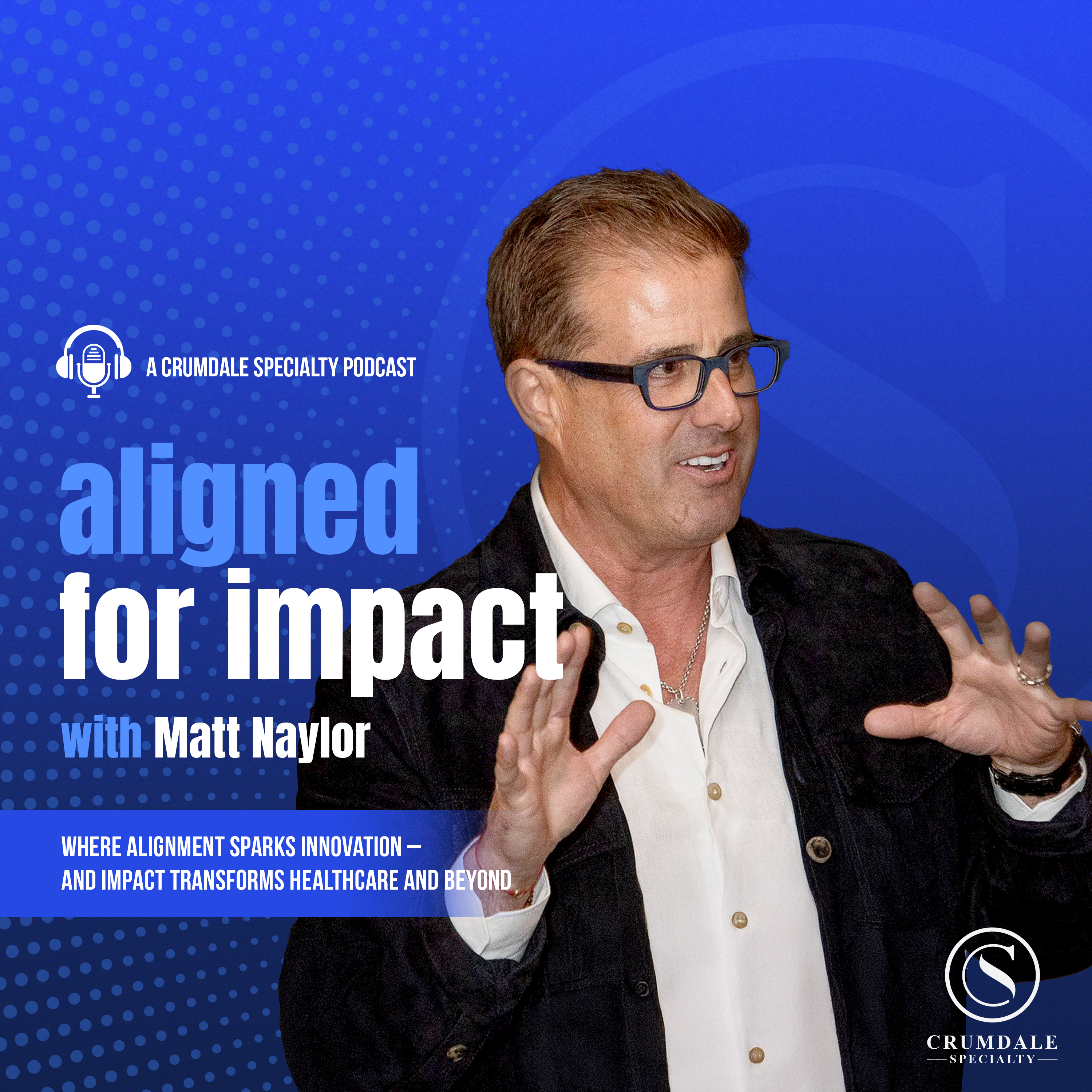
[00:00:02] Speaker A: Welcome to Align for Impact. I'm your host, Matthew Naylor. I started this podcast because healthcare and leadership both come down to the same thing. Alignment. When people, purpose and performance connect, real impact happens.
On this show, we'll talk with entrepreneurs, brokers and change makers who are challenging what is broken in healthcare and in business and find new ways to make a difference for companies, communities and the people they serve.
I am the host of the Matt Naylor podcast. Welcome.
This is where we interview people and guests about their passion, their purpose, their happiness, their joy and their impact that they're making on their lives, their communities and their businesses.
I'm truly excited about today.
Our guest is a really innovative, creative, disruptive individual in the self insured health benefits space. He's really shaking up this ecosystem. It's my pleasure to introduce Ryan Hand Ratty from Swingle Collins. Let's just begin. Tell me about how you got into the benefits business. Because the benefits business is interesting, Ryan. Like people just don't get into it. Like somehow some way there's a, there's a story here behind you and how you, you got involved in employee benefits. Let's just begin there.
[00:01:31] Speaker B: Yeah, benefits definitely find found me. I did not find benefits.
Graduated high school, Dallas, Texas.
Played college golf at the University of San Diego after graduating in 2001. Played 5 1/2 years ish on many tours from Jupiter, Florida to El Paso, Texas to Phoenix, Arizona, everywhere in between.
Was fortunate to meet my wife and while golf was good to me and I enjoyed it, it wasn't going to provide the type of life I wanted for my family and we wanted to have kids. So went back to Dallas and met everyone I could. Didn't matter if you were in banking, finance, manufacturing. But multiple people introduced me to a gentleman who had a small group benefit shop in Dallas, Texas. He was 20 years my senior, from the same high school. He was looking for a right hand man and I worked for free for I think it was three months because he wanted to try me on for size coming off the golf course and I want to try insurance on my on for size and it worked.
Joined him and we significantly grew the firm. I was actually buying him out but Gallagher came around with a really good offer for him and obviously he was the senior partner. So sold to Gallagher and that was a great time in my life. Learned a lot from Gallagher and then fast forward today. Started the benefit shop for Swingle Collins and Associates.
[00:03:09] Speaker A: You know Ryan, I love hearing stories like yours of athletes.
You play golf collegially at a Very high level.
You tried to play professionally and faced some adversity and challenges.
What is it about that experience, the golf experience, the good.
Maybe some of the challenges that have helped shape you as a person and translate into the business that you're in today.
[00:03:44] Speaker B: Yeah, I think it's the grind, the willingness to work, the willingness to try something new.
Sometimes you succeed with that, many times you fail. But even when you fail, you just go right back at it, whether it's the next shot, the next day or the next client. Right. So it definitely taught me how to make mistakes and learn from them and work hard. I mean, ultimately, I wasn't Tiger Woods. I didn't have all the talent in the world.
I had to work my way to a certain point. And it's the same in the benefits business. If you, if you don't put in the work and you don't put in the effort, there's a lot of good people doing what we do and they'll find that next idea, that next innovation. So.
So for sure, the skills that golf taught me have passed on to my insurance career as well.
[00:04:37] Speaker A: Well, your firm is amazing. And what you do every day is phenomenal.
Health care is very complicated.
Self funding is very complicated. Health care inflation is really impacting people.
Cost is going up.
Outcomes aren't great. The experience is not always wonderful.
Tell us a little bit about what you and your firm are doing to help lower costs, produce a better outcome and create a better experience for your customers.
[00:05:06] Speaker B: I think the first thing we're doing is educating employers that there's alternatives to what they've always done and making sure they get comfortable with understanding the different pieces they can put in place, whether it is on the pharmacy side, pap programs, sourcing out of Canada, etc. Whether it's the auditing of claims versus just that, auto adjudication. But I think what is fun is we're in the idea business and not a lot of employer groups know there's even alternatives the way they've always done it.
[00:05:48] Speaker A: It's interesting you say that, Ryan. We're in the idea business because that's a very relatable thing. When you think of healthcare and all that's going on in the space, there's a massive amount of change taking place with technology and innovation and artificial intelligence, and there's all kinds of new emerging things around point solutions.
How are you and your firm, I refer to it as like point solution fatigue. But how are you managing that as a firm? And then how are you working with your Customers to bring to them things that are impactful.
[00:06:31] Speaker B: Yeah, we're trying to bring it down to a personal level and we're doing that by using their claims data and using resources to shop point solutions that are specific to them versus just higher level, hey, statistically you should have this many in this condition, et cetera. So we're trying to bring it down to a personal relation level to impact not only that employer group, but those members as well.
[00:07:00] Speaker A: You know, one of the big drivers in healthcare today is pharmacy benefits. And PBMs specifically are really under a microscope.
You know, they're getting a lot of bad press over the last year or so. And we don't believe that hospitals or large Insurance companies or PBMs are bad people, are bad companies. They provide a real service and do real things. But on the pharmacy side of the business, a lot has emerged over the last several years around specialty drugs, GPL1s, a lot of things have really impacted claims from a severity perspective. Can you tell us a little bit about what you and your firm are doing on the pharmacy side of the business to help to reduce costs and produce a better outcome there?
[00:07:52] Speaker B: Yeah, I mean, it's shocking when you see the cost of a drug, let's call it $8,000, that potentially you could get out of Canada for 2,000, and the member experience that you can get is more positive for that member.
So again, it goes down to just knowledge.
We meet with so many groups that don't even know that's even possible. They don't understand that this premium assistance programs are available.
So what we're trying to do is get their data and prove to them that there's a better way to do it. That again, positively impacts not only the employer, but the ultimate member.
Because to me, healthcare is always healthcare is very personal.
We don't get a lot of pats on the back from 80 to 90% of the members of our groups because everything's going okay. But when something big is happening for that family, for that person, we love finding solutions to help. Again, not only the employer, but that employee as well. It's hugely impactful for members to have a better experience at a better cost.
[00:09:01] Speaker A: At Crumbdale, we focus on limited partners, limited distribution. We're very particular about how we partner with people and we've learned a lot about you and your firm and how unique and special it is around leadership and culture.
Could you help describe a little like the culture of the company, what drives it?
[00:09:23] Speaker B: Yeah, I think we're 162 employee, $50 million company that still acts and behaves like a family company.
When you have your anniversary, you get an email from our founder. When you have a birthday, you have an email from our founder. He walks the halls, he shakes hands. When you get a 20 year anniversary, there's a gift, a 10 year anniversary gift. It's very important to us that we have a culture of a family business. Even as we've grown from, in my years, we've grown from 70 employees to 150, but we're, we're doing it as a big family.
[00:10:02] Speaker A: Ryan, in closing, earlier we spoke about the golf and a little bit about, you know, your leadership role and the producers in your organization.
When I think about joy and happiness and passion and purpose in life and impact, what would you say to a young person, what would you convey to a young person about how to find joy, how to find happiness, how to find passion and purpose and impact in life, what would you articulate that would be inspiring to a young individual like that?
[00:10:37] Speaker B: Yeah, I would say I would go back to my high school days.
We had a model of men for others and then we've put that in the different businesses we've put together. Others first.
If you're putting other people first, you're going to find happiness, you're going to find joy. It may be insurance, it may be banking, who knows? But if you are taking care of other people, I just feel strongly that you'll be very happy when you wake up the next day.
[00:11:02] Speaker A: Ryan, it's been a super pleasure having you here today with us.
Super excited. Not just where your firm has been in the past, not just where it is at the moment, but really more importantly about where you and your firm is going in the future. You're doing a lot of wonderful things and we're super excited for you.
[00:11:18] Speaker B: Well, thank you. And thank you for having me.
[00:11:20] Speaker A: Yep.
This is Matthew Naylor. You've been listening to Aligned for Impact.