Episode Transcript
[00:00:02] Speaker A: Welcome to Alignment for Impact.
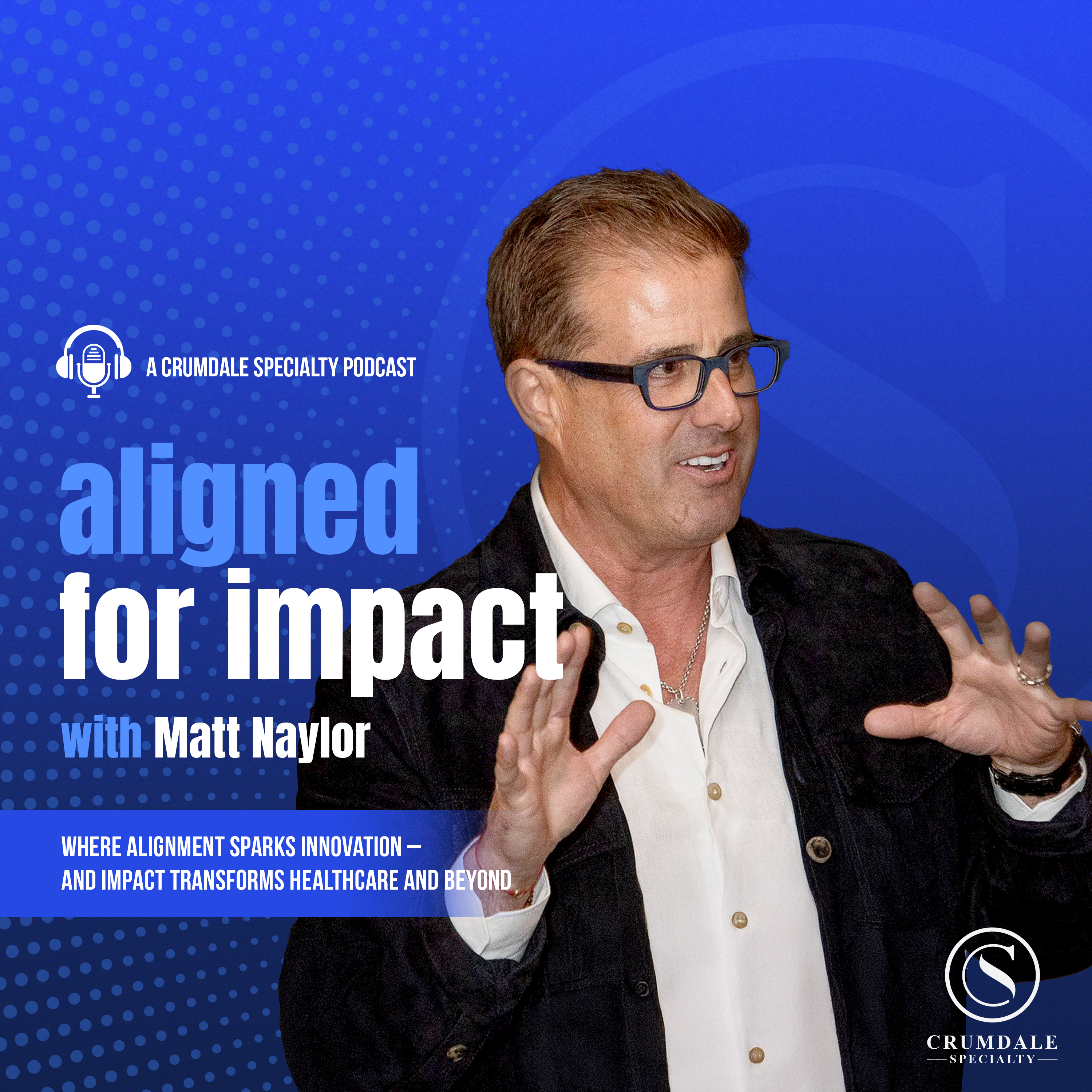
I'm your host, Matthew Naylor. I started this podcast because healthcare and leadership both come down to the same thing. Alignment. When people, purpose and performance connect, real impact happens.
On this show, we'll talk with entrepreneurs, brokers and change makers who are challenging what is broken in healthcare and in business and find new ways to make a difference for companies, communities and the people they serve.
Welcome back to the show. I'm your host, Matt Naylor. This is where we discuss with our guests their passion, their purpose, their happiness and joy, living a life of impact on themselves and others.
Today I'm excited to welcome someone who has really been shaking up things around self insured health plans. He's an amazing employee benefits consultant and he is the host of his own podcast. His story is great. Once running the floor of a family run business in the restaurant industry in New Orleans, now making a real impact for employee benefit health plans around the nation. His story is filled with passion, purpose, happiness and joy. Please welcome Justin Burgess. Justin, I love Icebreakers. I think it's just a great way to start a conversation.
And when I really started to learn about you, what struck me was you were in the restaurant business with your family in New Orleans.
How did that all start for you?
[00:01:44] Speaker B: Yes, it was a family business. It was Sid Mars Restaurant. So my grandfather was Sidney, Sid, Marion was Sid Mars. That's how I put together. And I was around 12 to 15 years old when the height of the business was at its height. And I just got addicted to spending time with family and having some sense of responsibility and obviously some sense of cash at a young age for working.
So I just always loved that time with my father.
[00:02:09] Speaker A: Being in a family run business can be fun, you know, can be exciting and rewarding, but can also be challenging.
In transitioning from the restaurant business to the employee benefits business had to be a really big transition for you.
What did you learn in the family side of the business that helped you transition into employee benefits?
[00:02:39] Speaker B: Yeah, I think things go wrong.
We're in New Orleans, so hurricanes are very frequent and you know, we're a family business, so if our freezers go out with all the food, that's our cash. It's like we don't have investors. And I remember going there during hurricanes and making sure the generators were filled with gas and not shaken into the wood where it would burn.
So it's just that you make things happen and you don't say no to anything. You're like, okay, if we got to stay there till 2 o' clock in the morning, we're doing it.
And that's how my father is. He's very much the picking up the trash mentality person. And we were having this conversation in the other room. It's like, yes, I'm a producer, but at the end of the day, I'm a servant to my clients. So I don't hold the title of account executive or client advocate, but if they want me to call a provider for them, I'm going to do it the same way. My father would walk around the restaurant picking up trash every single day.
[00:03:29] Speaker A: You know, Justin, what I'm hearing you say resonates with me so much. It's no options, no excuses.
Do whatever it takes for to serve the client the right way is that.
[00:03:46] Speaker B: We'Re all in the service business, whether we like it or not. We're serving somebody. And you're serving brokers. We're serving customers. And restaurants are serving customers as well.
[00:03:56] Speaker A: That's amazing. How did you transition out of the family business?
Because it's a real big inflection point in your life into insurance and really employee benefits.
[00:04:11] Speaker B: Yeah. So we had a really crazy story. So we were on the lakefront of New Orleans, and actually Hurricane Katrina ended up wiping our building down to compile on, so we had nothing left. And after that, we were in the battle with the state over eminent domain, property seizure, and things like that. Then that battle took 10 years. During that period, my father said, look, I want to go figure out and do this again.
We opened up another restaurant, another location, right when the BP oil spill came around. So we had the success for 30 years, lost it during Katrina, reopened, got back to success.
Then BP oil spill. So we, like, went down all that time I was in college and trying to be my own independent person, then would come back on the weekends and help the family business out. But on my last podcast that I did, I said, I got to see my family at the highest point of their life and the lowest point of their life all within, you know, 10 years.
[00:05:05] Speaker A: Can you. Can you speak to that and how that, you know, because what I hear you saying is you learned how to be really resilient.
How is. How is that. How did that experience help shape you into, like, the person you are today?
[00:05:24] Speaker B: Yeah, I think that's just New Orleans people. We're just so resilient. I mean, we've had so many hurricanes since Hurricane Katrina, and we just have that rebuild mentality is like, we, We. We just. I just left Jazz Fest. That' a little sunburnt. Sorry.
[00:05:36] Speaker A: Nice.
[00:05:36] Speaker B: Dave Matthews Band, the Revivalists was out there all day long.
But we love the culture. That's the biggest thing. And we deal with the hurricanes and flooding and streets not fixed, but we're just resilient. We'll rebuild. I mean, it was awkward point in New Orleans. I lived in Metairie at the time. My wife lived in New orleans. Metairie got 2ft of water. New Orleans got 10ft of water. So my wife lost everything.
We lived on a second story, thankfully. So, like, we just lost our bottom story. So you just had these people that were small businesses just figuring out things. I mean, my broker at the time that I was with, and he's. He had clients that he had during Katrina. So carriers were doing premium holidays. And, you know, you still had to service your clients, but thankfully, obviously, some people kept paying their bills. And so from a broker standpoint, it was a crazy point in the marketplace.
[00:06:30] Speaker A: And what was. And when was your entry point into insurance and employee benefits?
[00:06:36] Speaker B: 2014, I think that was the year.
So I was fresh out of college and just applied to a random job online. Didn't even really know what insurance was. Had a bunch of friends that got into the Northwestern Mutuals, the other insurance. But I didn't really understand what health was. And I'm glad I found it because it's.
It's that customer service passion. Like, I. My. If my kid asked me, I want a job in the summertime, I'm gonna say bartend or wait tables or do something where you're talking to somebody. Two of my clients sat at the bar that I bartended when I had no clue how to make drinks. Like, I was looking up how to make drinks in the back, but how I. Bartender was. The bartender didn't show up.
You know, I could serve beer and pour you a shot, but I didn't know some of the cosmos, and, you know, not at the age that I was, you know.
[00:07:25] Speaker A: And what did you start when you got into the insurance business? What did you start selling first? Like, because what you do today seems to me like it's pretty different than what you did when you started.
[00:07:35] Speaker B: Yeah. So I got in right around the technology boom. And it really wasn't an insurance play. It was a just a straight admin play. And the. I think the business has evolved to.
Back in the day, people just make things work better for me administratively. Okay. What does that mean? Okay. Ease and Employee Navigator started coming out then. Now it's a. I don't even talk about Ben Admin as a Differentiator. It's like, what can you do on the specialty side of the drugs? And what can you do to solve my claim problem? That's purely it. Every broker has access to the technology, but not every broker understands the side of the equation.
[00:08:11] Speaker A: You know, Justin, when I speaking to you, learning about you reimagining redefining health insurance is a really, really difficult thing to do. Health insurance is fraught with issues and problems and challenges.
It's a really complicated ecosystem of really large insurance companies and things that are emerging constantly.
I've seen and I've heard you speak about and be pretty vocal about transparency and fiduciary responsibility.
Would you just tell us a little bit about your philosophy, your approach?
When we think of transparency and health insurance is not very transparent and we think about an employer and their fiduciary duty and what are you doing? How are you reimagining that?
What impact are you bringing to those two areas?
[00:09:14] Speaker B: Specifically, I think it starts off with every conversation I get into is, what's your average salary of your population? We're all sitting at the table. We all make very good money in this business and most C suite people make good money. Yet we're making decisions for people that make 40 to $45,000 a year. I'm not sure what the average in the US is, but I think it's pretty darn close to that. So you're telling me that we're leaving them with $5,000 deductibles and having to pay hundreds of dollars for drugs? I think that's just step one is giving people access to a product that helps them out with their drugs. That's their most. That's their biggest ticket item. That's the most thing that's going to be every single month. If you're solving. I've seen some of the stuff that Crumbdale's done for all my groups as far as the Humira's, the Biosimilars, but that's huge. I had an HR director like, and she sent me a text. She's like, you saved me 300amonth on my drug. Just me. And she makes good money. But it's the fact of, like, we're just all fed up with the things that we have to pay for in our daily lives. And when you add on health care and you're seeing the Mark Cubans of the world go on TV and talk about just PBM transparency, that's what I think of as like, yes, we need to fix the problem of vendors and Carrier partners hiding money in certain places. But be transparent to your employees and tell them we have a solution to get you a drug elsewhere if you want to go down that route.
Because providers and especially pharmacists are telling people about these options.
[00:10:37] Speaker A: Justin, we know that healthcare is really complicated to understand.
Creating better outcomes, lowering cost and creating a better experience for your clients, your employer groups. Can you tell us a little bit about what you're doing to drive to the lowest net cost, create a better experience for the members?
[00:10:59] Speaker B: Yeah, I think the easiest is the low hanging fruit is the Rx stuff.
That's a gimme right there.
Also I think you need to pair it with advocacy. I think that's the biggest hurdle is brokers want to be very transparent and help our employer clients and employees at the end of the day. But they don't really want to talk to someone like me.
I know how to finagle healthcare, but not like a Crumbdale advocate can, that actually has, oh, these are the rankings of all the providers in your area based off of quality metrics. I kind of know what are good hospitals and not so good hospitals to go to, but just give them people those tools and resources where.
And also like on the ra, I was dealing with a situation for one of my Crumbdale groups where drug got denied and it was just a little system glitch. But working with the team and a vendor that works in response quickly is very important to me for my employer clients.
[00:11:50] Speaker A: You mentioned pharmacy and PBMS are in the news all the time.
Recently, over the last year, they're, they're getting some really bad press and you know, I don't think, we don't believe that, you know, hospitals are really the problem. We don't really think the insurance companies or the networks are the problems. We don't really believe that PBMs are the problems. Like they're all part of the solution.
Pulling them together in a way that's unique and distinctive is terribly difficult to do. But on the pharmacy side of employee benefit programs today, PBMs specifically are getting a really bad rap.
And we all know that high deductible health plans are certainly not helping the situation with PBMs. New emerging specialty drugs are obviously having a very large impact. High utilization around GPL1s are really driving a lot of cost on the pharmaceutical side.
What can you share with us that some of the things that you're doing for your customers and clients that are really impacting their pharmacy cost?
[00:13:02] Speaker B: I would probably start with dpc. It's just getting people to a doctor that's quicker and faster. I'll tell you my personal experience. So I lost £50 and it was due to GLP1 drugs. And I went to my normal primary care doctor and eat healthy was the gist of it. I got my blood work done by. I just went and hired a cash bay doctor, said, I want a full panel, everything.
My Testosterone was low.
A1C was off the chart. And he's like, if you don't do this, you're going to be a diabetic, basically. And this was before the moon Jaro phase. And I've been very transparent about it. I'm not taking it right now. Took it for about a year and a half and I've phased off. I just maintained a healthy lifestyle. But given access people to a doctor that actually cares. And that's not a pencil pusher. And no offense to those doctors, that's what the system is designed for them to do. They only get 10 to 15 minutes with you. So giving people access to a doctor that cares about them, that's not trying to get them to a specialist that you have to wait longer to see. I think that's how you change healthcare is fast and quick access to healthcare. I have two kids and we use telemedicine all the time. But if we had a dpc, my wife would love it because every day it's a rash. It's something.
And I think about the employee that's making $40,000 a year. Yeah. They don't want to spend $100 on an urgent care visit or on a high deductible plan. It's potentially more.
And if you're on a high deductible plan, you want to see a specialist, you're looking at $300. I know that because my kids ent is $300. I'm on a high deductible plan. I chose that. But like these groups out there just, they have the high deductible plan as the cheapest option. People aren't choosing it because they like high deductible plans. We like it because of tax savings advantages. They like it because it's $10 versus high $100 a paycheck.
[00:14:47] Speaker A: Yeah. And with high deductible plans, like, we see a lot of utilization on the pharmacy side at the beginning of every plan year where members are, you know, they go to access their benefits and more often than not, they're going and picking up a prescription and they're out of pocket. Significant money is There anything that you're doing or your firm's doing to help drive that cost out of the system.
[00:15:12] Speaker B: Out of high deductible plans? I mean, I'm not a big high deductible plan guy. I mean, I like using HRAs as giving people some, you know, employer money that we can help subsidize some of that. So I think about the groups that have super rich plans, you know, you can buy down to the cheapest high deductible plan, implement an HRA or a MERPS kind of strategy that's going to, that's not doing anything to solve the claim problem. It's just alleviating some of that pressure. But obviously when you pair an HRA MERP with the cost containment solutions, you are basically taking care of the high cost specialty medications with folks like Cromdell and Weldyne. But it's really those in between meds that are not generics, that are the, you know, maybe one to $300 a month type drugs.
[00:15:51] Speaker A: Is there anything that you're doing around patient assistance programs that are in your mind unique and distinctive, that are in alignment with the, you know, so often the member is disrupted with access to the proper facilities, the proper doctors, the property, pharmacy benefits at the kind of the point of sale or the point of the severity of the issue.
We see so many emerging things on the pharmacy side around patient assistance programs that are really not, they're very disruptive to the member. Are there things that you're doing that you think are driving to a lower cost and engaging a member in a, in a way that's benefiting the member?
[00:16:40] Speaker B: The situations that I had come up in the last six months, I've tried to call the employee personally just to tell them, like, give them a sense of comfort that this is legit, we're doing this for a reason. And half the calls that I've had, they've worked for employers that have done this.
So maybe they were working on a larger employer. And my employer's 200 lives, well, their 600 life employer was already doing it. So they're like, I was expecting this would happen. That was my last phone call. I was kind of guy just said, hey, call my wife, she deals with us. Oh yeah, I remember doing that application for them, you know, so people are getting used to this. And I think with the Amazons of the world and all these and the Mark Cubans, like the market is kind of telling people they have access to drugs elsewhere. Like, so as much as the broker can do a good job. The market is telling us, yes, you can go pay for drugs cheaper elsewhere.
[00:17:30] Speaker A: And then we see a lot, Justin, around employers having point solution fatigue. We see brokers with point solution fatigue. There's so many new, innovative, creative, emerging things. When you think about artificial intelligence, you think about technology and data and analytics, but then you think about all the things that are in the supply chain around optimizing a self insured health plan.
Give us your perspective on your clients and point solution fatigue. What are you doing to help your customers deal with those challenges?
[00:18:05] Speaker B: I'm having fatigue as well. I've actually posted on LinkedIn about this. I love all my carrier partners but it's getting to a point where it's too many to handle. But I would say we can solve this whole problem by just giving people advocates and giving people real human beings. Yes. There's a population of people like me who love to communicate via apps and that's my thing. I don't really want to talk to a person, but if my kid's got a very expensive drug, I'm going to pick up the phone and talk to someone that understands what they're talking about. And most likely anything that a Crumdale advocate has dealt with, they probably dealt with that multiple times before.
So I'm not the only one that has a kid with XYZ condition.
I don't know what, I'm a freaked out parent and my HR director for one of my clients that's with well done right now and her kid had something she wasn't thinking like an HR director. So I know if something happened to me personally I would be like, I'm a dad, I don't know what I'm doing. Not as a sound, savvy benefits expert that knows how to navigate the healthcare system. So I think we need to give people less apps and communication tools and give them people through advocacy, not broker solutions, advocates that understand the healthcare system.
[00:19:15] Speaker A: That's awesome. It really is awesome. Justin. In closing, I love asking questions about really leadership and culture and as I've had the opportunity to get to know you, I know that you know, leadership and culture is really important to me as an entrepreneur. Can you just describe in your own words like as your own entrepreneur, what's meaningful to you when you think about culture and leadership?
[00:19:47] Speaker B: Yeah, I mean I consider myself an entrepreneur. You can, you can be an entrepreneur inside of someone else's business. At the end of the day, you have to treat yourself like a, if you're a salesperson, treat like you own, you own the company. And that's because your clients are buying from you at the end of the day.
But I had a flip in my, my switch just went off recently is when if you want to do something hard in your life that reflects into your business side, you have to take that, that challenge. So I'm doing a 30 day challenge where I'm running a mile with a 20 pound weighted vest on an assault runner bike. And I'm doing it. I did it at 2:00 clock this morning.
[00:20:21] Speaker A: What's your stress thing on your whoop?
[00:20:23] Speaker B: It's probably off the chart, but I want to show to the market and my employer clients that I'm doing something hard every single day to when I want to change your health plan. It's not hard, it's easy. You can't tell me that, you know, doing the same old thing. It's not hard, it's easy. If you want to change your health plan, you have to change the outcome of things. You can't just put it on a roller coaster.
[00:20:44] Speaker A: Yeah. And we spent time together here.
You know, you're a family man, you've got amazing kids, you, you really serve your customers the right way. What, what brings you the most joy and happiness? What, what's driving your purpose and impact.
[00:21:00] Speaker B: In life right now? It's the messages that I'm getting on LinkedIn from random people and saying, hey, you know, I've been following your stuff for a while and just want say keep it up. And, and I know everybody who likes it. My posts, David Barrett, he always likes my stuff. Ben likes my stuff religiously. And when you go to your high school reunion for guys you haven't seen in 10, 15 years and like you must be killing it, dude. I'm like, no, I'm just an average, average guy that has a camera. But the market sees me as someone that's just out there hustling and grinding. And I think that's what someone like you, when you started this business, the things that you're doing now, you didn't think you can do when you first started. And every employer client that I work with, I have, especially with RV dealers. I have five RV dealers with about 60 locations. They started off as one RV location, now they're at 15.
[00:21:54] Speaker A: That's incredible.
[00:21:55] Speaker B: So we all have that grit mentality.
[00:21:58] Speaker A: I love that word, grit.
I think it's the one word that.
[00:22:02] Speaker B: You'Re not born with.
[00:22:03] Speaker A: Grit, you're not born with it. And when you try to teach someone to run fast, it's not fast. It's almost impossible.
[00:22:10] Speaker B: I was doing payroll at 16 years old.
[00:22:12] Speaker A: Yeah, well, you are a person full of grit. With that thought of grit, what advice would you give someone to live a life of impact?
What would you say to someone younger or a friend or a family member or anyone around, hey, here's how I lived my life.
And if I could give you one piece of advice, this is the piece of advice I would give you.
[00:22:40] Speaker B: Find a mentor. Sean Torres with Intellicom Consultant. He's one of my mentors and one of my clients and I looked up to him very much. And the reason is when I made that call to him to say what should I do? He said jump.
And I said yes.
And if I wouldn't have talked to him, I probably would have took the easy path out and just take a very cushioned salary job. And I decided to bet on myself.
[00:23:03] Speaker A: Well, you don't sound like the cushy type of person. You don't sound like you're very laid back, a high achiever, doing great things, making a real impact on healthcare.
You've really made a big difference in your clients lives. I've seen it. And Justin, it's been a real pleasure and thank you for joining us today.
[00:23:21] Speaker B: Thank you. Appreciate it.
[00:23:25] Speaker A: This is Matthew Naylor. You've been listening to Aligned for Impact. It.